
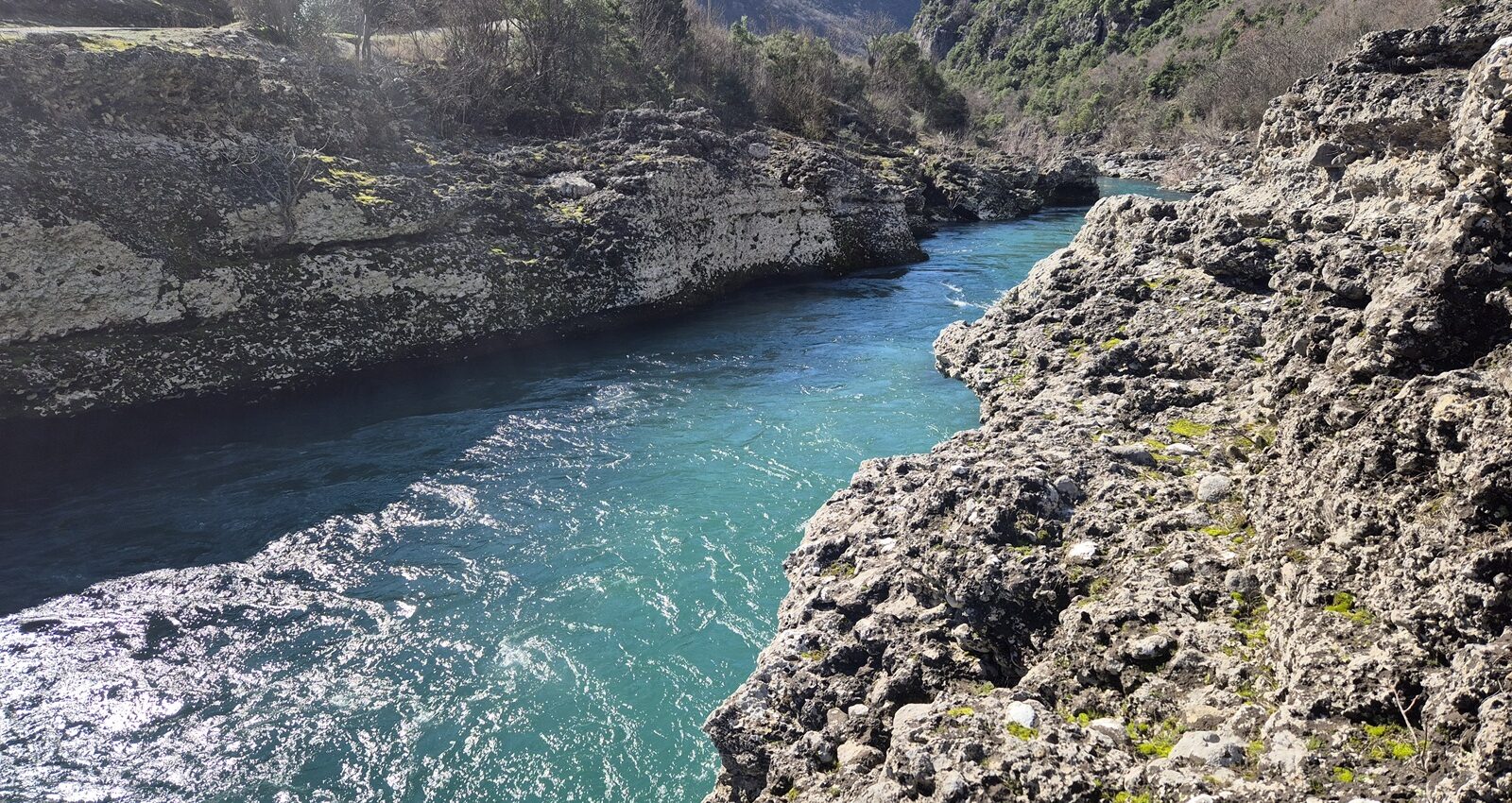
The geographical position of Cijevna Canyon has been highly important throughout history for the movement of people, the development of trade and connections between regions. River valleys and natural passages made it easier to cross mountain barriers, and important routes passed through this area as early as antiquity.
In ancient times, the Durrës–Shkodër–Doclea road, a branch of the famous Roman Via Egnatia, passed through this area. In present-day Montenegro it was known as the Imperial Road, while in the Middle Ages it was called Via de Zenta.
One of its important branches was the Caravan Route through the Cijevna Valley and canyon, an important connection between East and West. This trade route linked major centres of the period, including Constantinople (Istanbul), Peć, Plav, Doclea, Onogošt (Nikšić), Narona (Metković) and Dalmatia. Other routes were used later, including Kotor–Cetinje–Podgorica–Medun–Cijevna–Plav.
Merchants, travellers, nobles, military commanders, pashas, viziers, princes and kings passed through Cijevna Canyon. Its strategic location fostered extensive trade in salt, grain, tobacco, livestock, clothing, weapons, gunpowder and other goods. Mail was also carried along this route between distant regions.
The importance of the caravan route encouraged the construction of bridges, inns (hans) for travellers, grain mills and textile workshops. In what is now Montenegro, the road crossed the Cijevna River at Ljemaja Bridge, continuing via Dinoša and Ćemovsko Polje towards the plains.
The significance of this route is documented in the writings of numerous travellers and researchers who passed through it, including Mariano Bolizza, Evliya Çelebi, Vincenzo Maria Coronelli, Johann Georg von Hahn, Hyacinthe Hecquard, Theodor Ippen, Baron Franz Nopcsa, Kurt Hassert, Antonio Baldacci and Edith Durham.
The memory of the former importance of the caravan route survives in oral traditions and local place names. In parts of the canyon, residents still use the name “Rruga e Arit” (Golden Road) for sections of this ancient trade route, recalling a time when Cijevna was one of the most important transport and trade corridors in this part of the Balkans.